


Expanding your business can be an exciting journey, but choosing the right model is crucial. Two common methods are licensing and franchising. While they might seem similar, they have distinct differences that can significantly impact your business growth and control. Let’s break them down in simple terms.
What is Licensing?
A licence allows another party (the Licensee) to use your business’s intellectual property (IP), such as trademarks, branding, or products, without adopting your full business model. In exchange, the licensee pays a licence fee or royalties.
Key Features of Licensing:
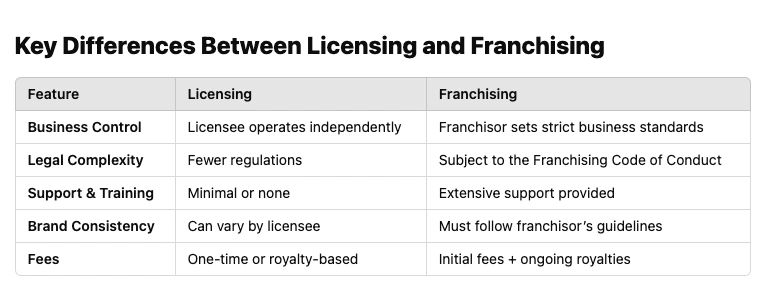
- Less Control: The Licensee runs their business independently, following basic usage rights.
- Lower Legal and Operational Requirements: A licensing agreement is typically less complex than a franchise agreement.
- Minimal Ongoing Support: The Licensor is not required to provide ongoing training or support.
🔹 Example: A coffee company grants a licence to a manufacturer to sell coffee pods under its brand name, but the manufacturer operates its business independently.
What is Franchising?
Franchising is a structured business model where the Franchisor provides a complete system for the Franchisee to operate under, including branding, training, marketing, and ongoing support. In return, the Franchisee pays an initial fee and ongoing royalties.
Key Features of Franchising:
- Higher Level of Control: The Franchisor sets clear standards on how the business must be operated.
- Comprehensive Support: Franchisees receive training, marketing assistance, and operational guidance.
- Legal Compliance: Franchising in Australia is regulated under the Franchising Code of Conduct, ensuring transparency and accountability.
🔹 Example: A well-known fitness brand allows Franchisees to open studios under its name, following strict guidelines on branding, services, and customer experience.
Which Model is Right for Your Business?
Choosing between licensing and franchising depends on your long-term goals, level of involvement, and desired control.
- Licensing suits businesses that want to monetise their brand or products without managing operations.
- Franchising is ideal for those who want to scale while maintaining consistency and control over brand execution.
If you’re considering expanding through franchising, it’s essential to have a clear strategy and legal guidance to ensure compliance and success.